

-
About UsA landscaping and flower seed company mainly engaged in the production, sales, and export of flower seeds, tree seeds, forage seeds, green manure seeds, lawn seeds, and medicinal herb seeds.

-
-
-
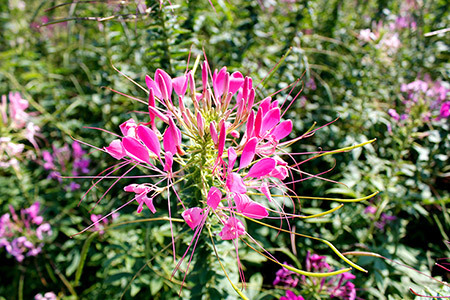
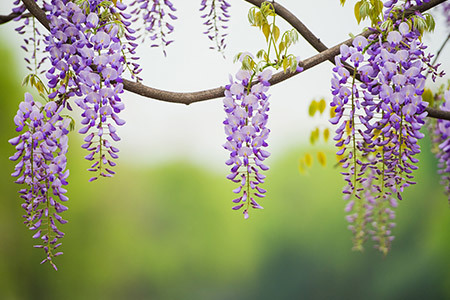
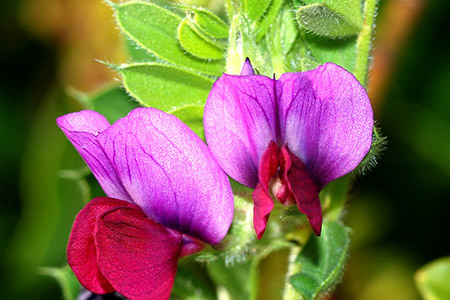

The family sowing method for herbaceous flowers.
Release time:
2016-09-18 15:34
Source:

There are many varieties and colors of flowering plants, and planting flowering plants at home has gradually become a trend. Home sowing of flowering plants can be done at any time. Below, we will discuss the methods for home sowing flowering plants.
1. Seed treatment: Before sowing flowering plants at home, the seeds need to be soaked. For seeds with hard shells, they should be sliced to expose the seed, such as lotus seeds, which need to have the top cut or smoothed to expose the seed coat before sowing. Lavender seeds should be soaked at room temperature for 24 hours to promote germination before sowing. To prevent the spread of pests and diseases, seeds should be soaked in a 0.1% mercuric chloride, 0.3% copper sulfate, or 1% formalin solution for 5 minutes for disinfection, and then washed with clean water before sowing.
2. Seedling trays or flower pots: Prepare a seedling tray or a flower pot with a larger opening for sowing, not smaller than 12cm, as smaller pots can dry out the soil easily. Professional seedling trays can be purchased for this purpose.
3. Soil: For beginners in home sowing of flowering plants, it is recommended to buy professional nutrient soil that has good drainage. A small stone can be placed at the drainage hole of the pot to prevent soil from leaking out when watering. The soil should be thoroughly soaked using the infiltration method.
4. Home sowing usually involves a small quantity, so the sowing method can be point sowing. Use a toothpick or tweezers to dip in water and pick up a seed to place in the seedling tray. For larger seeds, the soil covering should be about 2-3 times the diameter of the seed, while smaller seeds should be covered with fine soil just enough to not see the seeds; fine seeds can also be sown without covering. After sowing, compact the surface to ensure close contact between the seeds and the soil, facilitating water absorption for germination. After compacting the surface, cover it promptly to retain moisture. Water immediately after sowing, using a fine spray watering can or a sprayer.
5. Seedling management: After germination, pay attention to watering, shading, and thinning. Avoid direct sunlight, as the potting soil can dry out too quickly, leading to water deficiency for the seedlings. If there are too many seedlings, thinning can be done in time to prevent them from becoming leggy. For example, after the seeds of petunias germinate, they can be transplanted when they have 2-4 leaves.
The main varieties of flowering plants for home sowing include petunias, cosmos, half-branch lotus, chrysanthemum, snapdragon, beauty cherry, South African marigold, dianthus, daisy, and poppy.
Previous Page
Next Page
Related News
Our company is a professional firm focused on selling flower seeds, forestry seeds, pasture/green manure seeds, and other types of seeds. We are dedicated to providing customers with high-quality and diverse seed products to meet various plant growth needs.
Manual for Cultivating Green Plants
Green plants are an indispensable part of our lives. They can purify the air, reduce noise, and provide a comfortable environment. This manual aims to help friends who love green plants to better cultivate various types of green plants, allowing them to thrive.
How to plant the willow-leaf embroidered chrysanthemum?
The willow-leafed chrysanthemum is a beautiful flower, loved for its unique leaf shape and vibrant blossoms. Below is an introduction on how to plant willow-leafed chrysanthemums.
Cultivation of Red Leaf Barberry
The red-leaf barberry is a deciduous shrub belonging to the Berberidaceae family and the Berberis genus, and it is a variety of barberry. It prefers sunlight, is somewhat shade-tolerant, cold-resistant, drought-resistant, and can withstand pruning. The branches are reddish-brown, and the leaves are oval-shaped, either solitary or clustered, remaining red throughout the year. The flowers bloom from May to June, are yellowish-white, and the fruits turn bright red and beautiful when ripe. It can be used to decorate flower beds and flower mirrors, and is an important tree species for color block combinations in landscape greening.
To take good care of flowers, watering them is crucial. However, many novice flower growers tend to be overly diligent, taking care of their plants even more frequently than they eat, and they feel that watering the plants a few times a day is still not enough. This can easily lead to root rot and death of the plants, which is indeed quite frustrating. In that case, why not grow a few water-loving flowers? The more you water them, the better they grow, making them perfect for those who love to water their plants frequently.
Urban greening is an important component of urban construction.
Urban greening is an important component of urban construction, aimed at improving the urban environment and enhancing the quality of life for residents. In this process, flowers play an indispensable role. They not only beautify urban spaces but also provide residents with a pleasant visual experience.
Address: Qiaotou Town, Huancui District, Weihai City, Shandong Province
Telephone:+86-13606493728Yuan Xiaoyu+86-13863182720An Hongmei
E-mail:songlin115@126.com